
Drip Irrigation Filter Guide: Types, Mesh & Cleaning
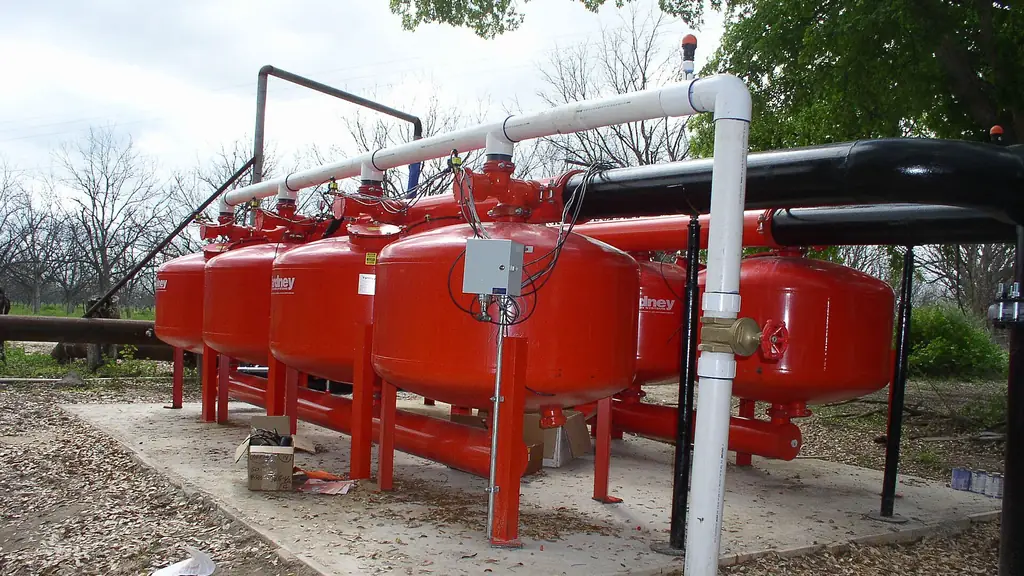
Table of Contents
Why Filtration Is Non-Negotiable
Every drip emitter on your field has an internal labyrinth channel measured in fractions of a millimeter. A 2 L/h emitter's channel is roughly 0.5–1.0 mm wide; sand grains, algae clumps and rust flakes smaller than that will still wedge and starve the plant downstream. Filtration is not an accessory on a drip system — it is the component that keeps every other component working.
The economics are lopsided: a filter costs a fraction of one field's emitter replacement, and it protects everything downstream of it. Fields that skip or undersize the filter show the same failure pattern within one season — partial clogging at the line ends, uneven growth, and a slow, expensive replacement campaign.
Filter Types
Four filter families cover drip and micro sprinkler systems. They differ in how they trap particles and how they're cleaned:
- Screen filters — a stainless or nylon mesh cylinder inside a housing. Simple, cheap, and the standard choice for clean well or municipal water. Clean by removing and rinsing the screen.
- Disc filters — stacked grooved discs that trap particles between the grooves. Clean by back-flushing in place without opening the housing. The best general choice for surface water, algae and organic matter.
- Sand media filters — a tank of graded sand that filters the whole flow through the media bed. Handles heavy sediment and organic loads; the standard first stage for pond and river water. Cleaned by back-flushing the tank.
- Hydrocyclone / sand separators — a cone that spins heavy sand and grit out of the flow by centrifugal force. No moving parts, no mesh to clean — but it only removes dense particles, so it's always used as a pre-filter ahead of a screen or disc filter.
For most drip systems the practical ladder is: hydrocyclone → sand media → disc → emitter for dirty surface water, or simply screen/disc → emitter for clean well water.
Mesh & Micron Ratings
Filter fineness is rated two ways. Mesh counts the openings per linear inch; micron is the opening size. They're two labels for the same number:
| Mesh | Micron (approx.) | Protects |
|---|---|---|
| 80 mesh | 180 | Large emitters (8 L/h+), micro sprinklers |
| 120 mesh | 130 | Standard drip emitters (2–4 L/h), most micro nozzles |
| 150 mesh | 100 | Small emitters, mist and fog nozzles |
| 200 mesh | 75 | Fine mist, high-precision emitters |
The rule: filter finer than your smallest emitter channel. If a catalog says "120 mesh recommended," the emitter's channel is sized around 130 microns — an 80-mesh filter passes particles that can still wedge in the labyrinth. When in doubt, go one step finer.
Sizing Filters to Flow
A filter is also a hydraulic restriction. Undersize it and you get pressure loss at the filter — which the regulator downstream can't fix, because it's not the filter's job to restore pressure. Size filters by flow, not by pipe size:
- Calculate zone flow: sum every emitter or head in the largest zone. A 2 ha block at 10,000 m of 2 L/h line spaced 30 cm ≈ 67,000 L/h of flow — the filter must pass that without choking.
- Stay under 70–80% of the filter's rated capacity — a filter running near its limit clogs faster and loses more pressure.
- Match filter outlet to the header, but choose the filter body one size up from the pipe if flows are near the limit. A 2" pipe can carry a 3" filter body happily.
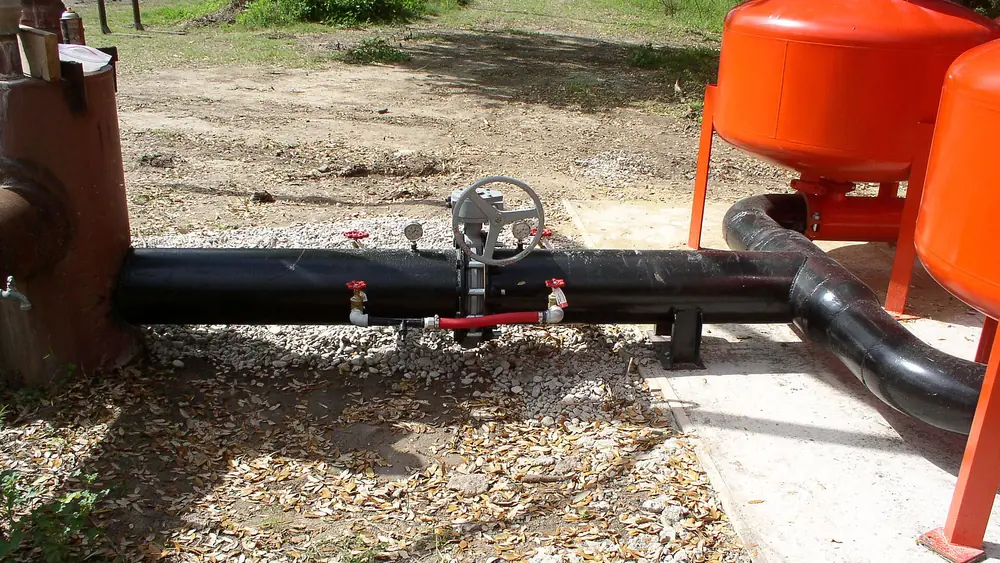
- Add a pressure gauge before and after the filter. A growing pressure difference across the filter is the clogging warning — clean it when the drop exceeds ~0.3–0.5 bar.
Cleaning & Maintenance
Filters only protect while they're clean. Build the routine into the irrigation calendar:
- Screen filters: inspect weekly in season; rinse the screen when the pressure drop grows, or when you see debris on inspection. Keep a spare screen on hand — a torn screen is worse than no filter, because it passes everything while looking protected.
- Disc filters: back-flush weekly or when pressure drop signals; disassemble and soak discs in a mild cleaning solution monthly on dirty water to remove embedded organic matter.
- Sand media: back-flush until the sight glass runs clear, typically after every heavy irrigation cycle on surface water; top up media yearly as fines are lost.
- Hydrocyclone: purge the sand collection chamber before it fills — it's a bucket, and a full one stops working.
- End of season: drain, clean and store filters indoors; a frozen, algae-filled filter starts the next season already clogged.
Ordering Specs
When you buy filters for a project, specify these points so the station matches the field:
- Type and mesh — e.g. disc filter, 120 mesh, sized for your zone flow with 25% headroom.
- Connection size — inlet/outlet thread or flange matching your header (1", 1.5", 2", 3" common).
- Housing material — UV-stabilized PP for outdoor exposure; confirm pressure rating (4–10 bar typical) exceeds your system pressure.
- Spares — screens or disc stacks, O-rings and seals for the filter model, so maintenance doesn't wait on a shipment.
- MOQ and lead time — typical MOQ 1,000 pcs for smaller fittings, samples in 7–10 days, production 20–35 days. Ask for the pressure-loss curve of the filter at your flow — it's the number that tells you if the station will starve the field.
Buy the filter station last in your mind but first in your budget. Every other component's life — emitters, valves, regulators, pumps — is measured from the day the filter starts working.
NEXT STEP
Ready to Upgrade Your Irrigation?
Send us your requirements — our team responds within 24 hours with pricing and lead time.
Written by
Ray ChanIrrigation Buyer's Guide Author · Drip Irrigation Specialist. Ray helps global importers and growers source reliable irrigation products.