
Micro Sprinkler Guide: Types, Flow Rates & Selection
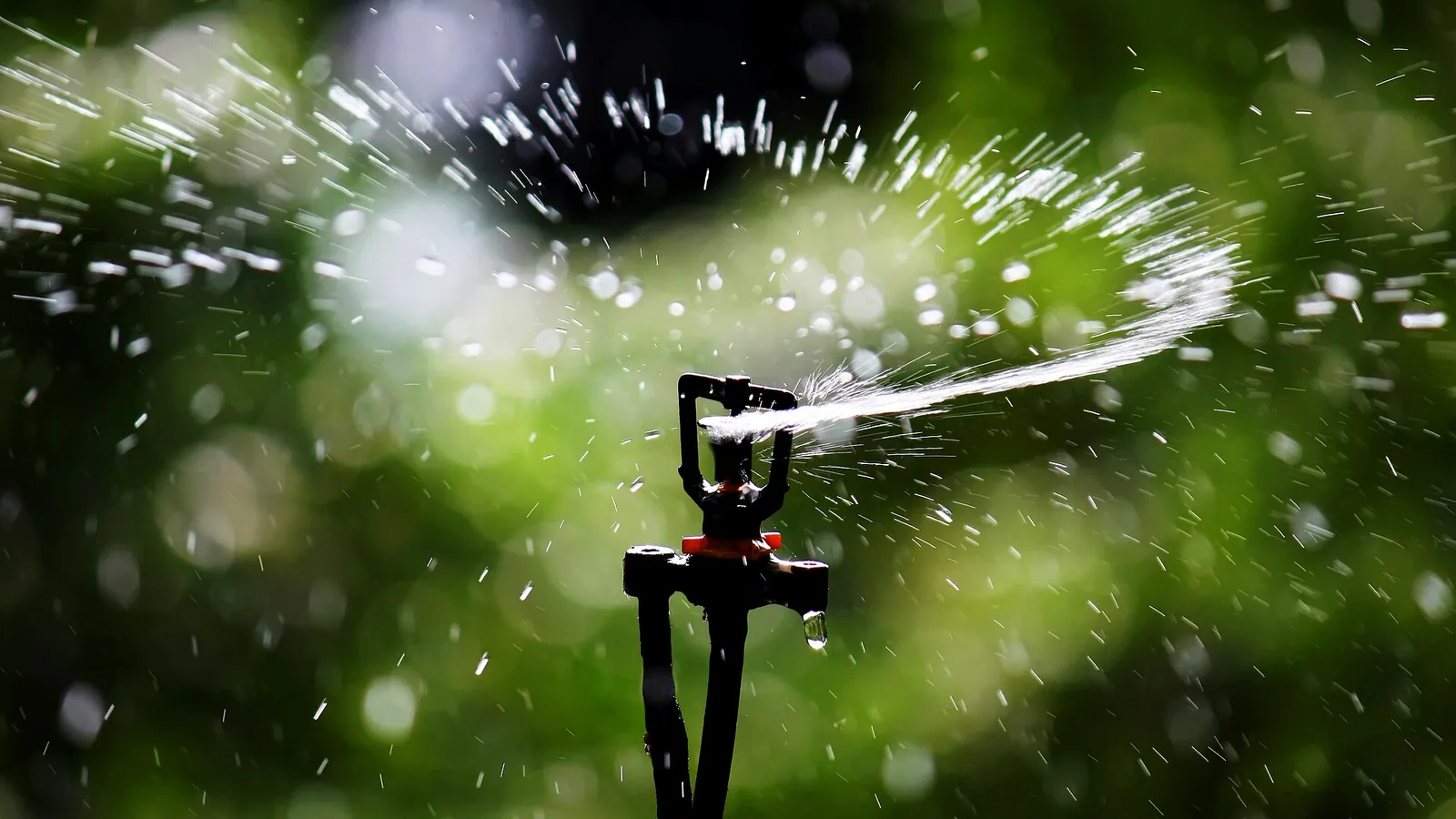
Table of Contents
What Is a Micro Sprinkler System?
A micro sprinkler is a low-flow sprinkler head that sprays water in a controlled pattern over a small area — typically a 1.5 to 8 m wetting diameter — instead of the 10 to 30 m throw of a full-size impact sprinkler. The system runs on the same low-pressure plumbing as drip irrigation, normally 0.1 to 4 bar, which means it works with a gravity tank, a small pump, or a standard mains connection through a pressure regulator.
Micro sprinklers sit between drip and conventional overhead sprinklers. Drip wets a narrow strip; micro sprinklers wet a circle. That circle makes them the practical choice for tree crops, nursery beds, propagation areas and any crop where you want canopy or full-surface wetting without flooding the field.
For exporters and growers the system matters because the same family of components — header lines, filters, pressure regulators, connectors — serves both drip and micro sprinkler layouts. One filter station, two application methods.
Types of Micro Sprinklers
Four families cover most installations. They differ in spray pattern, flow range and vulnerability to clogging:
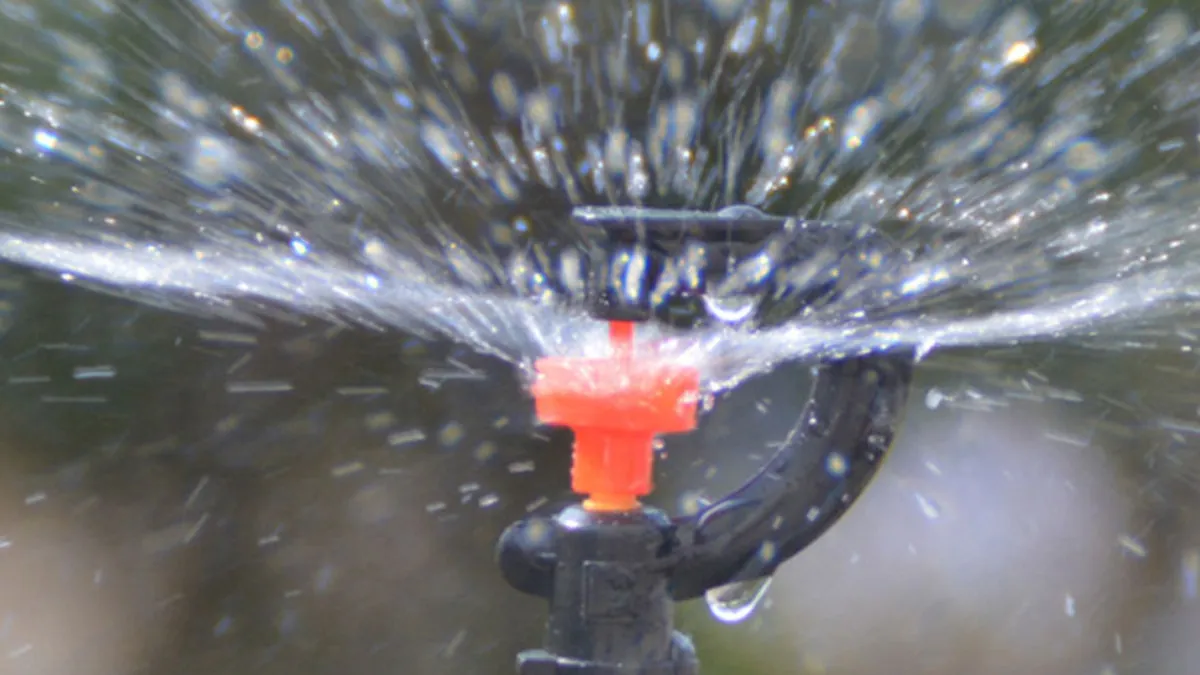
- Spinner / rotator heads — a rotating arm throws water in a full or partial circle. Flow 30–300 L/h, wetting diameter 2–8 m. The widest coverage per head; first choice for orchards and large nursery beds.
- Fixed spray heads — a static nozzle with a shaped slot produces a fan or jet pattern. Flow 20–120 L/h, wetting diameter 1.5–4 m. Cheapest per unit, very predictable, good under trees with low branches.
- Micro jets — small directional nozzles on stakes, often arranged in circles or strips around plants. Flow 20–70 L/h. Common in greenhouse and vegetable row applications.
- Mister / fogger nozzles — atomize water into a fine mist. Flow 20–60 L/h. Used for propagation, cooling and humidity control, not for irrigation volume.
Within each family you choose a full-circle, half-circle or quarter-circle version so adjacent heads overlap only at the edge and you don't water paths and drive rows.
Flow Rates & Coverage
The two numbers that define a micro sprinkler are flow rate (L/h) and wetting diameter (m). Both are rated at a reference pressure, and both change if you run the head outside that pressure window.
| Head type | Flow (L/h) | Wetting diameter (m) | Typical pressure (bar) | Best fit |
|---|---|---|---|---|
| Fixed spray | 20–120 | 1.5–3.5 | 1.0–2.5 | Nursery beds, under-tree |
| Micro jet | 20–70 | 1.5–4 | 1.0–2.0 | Greenhouse, vegetables |
| Spinner / rotator | 30–300 | 2–8 | 1.5–4.0 | Orchards, large beds |
| Mister / fogger | 20–60 | 0.5–1.5 | 1.5–3.0 | Propagation, cooling |
To size a zone, multiply heads per line by their flow, then check that the total fits the pipe and the water source. A 2.5 cm lateral at 2 bar carries roughly 1,800–2,500 L/h; exceeding that drops pressure at the far heads and ruins uniformity — the same hydraulic logic as drip laterals.
Working Pressure & Wetting Diameter
Micro sprinklers are pressure-sensitive. A spinner rated 2.5 m at 2.0 bar will shrink to a tight jet at 1.0 bar and blow out to an uneven ring at 3.5 bar. Two rules keep the system honest:
- Regulate the zone. One pressure regulator per valve set to the head's rated pressure. Do not rely on the main line's pressure.
- Design for the pressure range, not a single number. Ask the factory for the flow and diameter at low, mid and high pressure (e.g. 1.5 / 2.5 / 3.5 bar) and pick spacing for the worst case.
Wetting diameter sets your spacing. For a 3 m diameter, spacing heads 2.5–3 m apart so circles overlap slightly; for an 8 m spinner in an orchard, spacing follows the tree rows, usually one head between trees or a single head under a mature canopy.
Matching Sprinklers to Crops
Match the head to the crop's root zone, not the other way around:
- Fruit and nut orchards — spinner or fixed spray under the canopy, one head per young tree, or per 2–3 m of row for mature trees. Full-circle heads between trees, half-circle against the row edge.
- Nursery and propagation — misters for cuttings, fixed sprays for pot rows, spinners for field-grown liners. Fine nozzles need 120-mesh filtration upstream.
- Greenhouse benches — micro jets on frames or fixed sprays overhead, sized to the bench width.
- Field vegetables — micro sprinklers fit shallow-rooted crops better than drip when the soil is sandy and the rows are wide; otherwise drip is usually the better water saver.
If your project mixes crop types, split zones — one valve per crop group — because scheduling and head choice will differ.
Sourcing & QC Checklist
When you order micro sprinklers in volume, put these points in the spec:
- Material — UV-stabilized ABS or PP bodies, stainless or brass inserts for the spinner pin. Ask for UV test data if the site is high-sun.
- Certified flow data — ask for a test report at 2 bar, not just a catalog number. Flow tolerance ±10% or better across the batch.
- Filter requirement — confirm the recommended mesh for each nozzle (80–120 mesh typical) and include filters in the kit; clogged heads are the #1 field complaint.
- Interchangeability — standard 4 mm / 7 mm barb connections or 1/2" threads so spares and replacement heads match your connectors.
- MOQ and lead time — typical factory terms are MOQ 1,000 pcs, samples in 7–10 days, production 20–35 days. Confirm packaging per carton and barcode labeling before ordering.
Micro sprinklers are a mature, high-volume product — the quality differences show up in nozzle consistency and UV life, both of which you can verify before committing a container. Start with samples, run them at your site's real pressure, then scale.
NEXT STEP
Ready to Upgrade Your Irrigation?
Send us your requirements — our team responds within 24 hours with pricing and lead time.
Written by
Ray ChanIrrigation Buyer's Guide Author · Drip Irrigation Specialist. Ray helps global importers and growers source reliable irrigation products.