
Orchard Irrigation: Micro Sprinklers & Drip for Fruit Trees
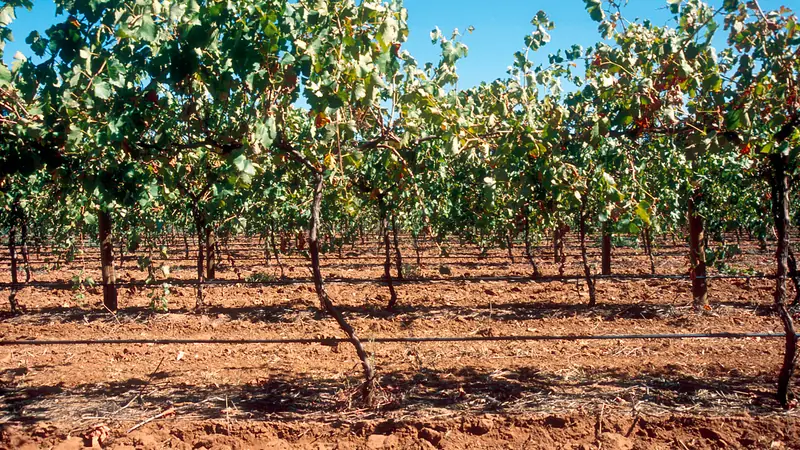
Table of Contents
Tree Watering Basics
Fruit trees are the opposite of row crops: one plant, one big root zone, and a root zone that grows for decades. The irrigation system must grow with the tree — which is why orchard irrigation is a two-phase decision, not a one-time purchase.
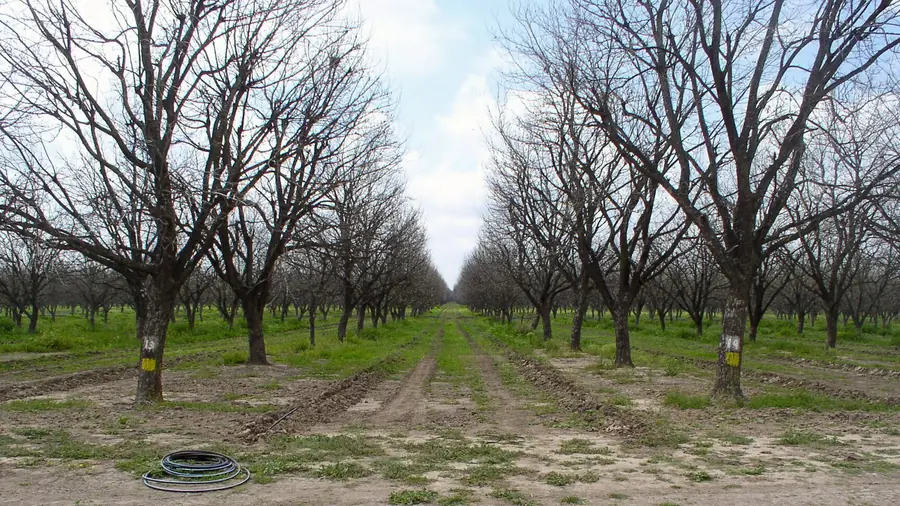
The root zone of a young tree is a small ball of soil around the trunk, maybe 30–50 cm across. Five years later, feeder roots spread 1.5–3 m from the trunk. Water the small zone in year one and you waste nothing; keep watering only that small zone in year six and the tree starves at the edges. Orchard systems are designed around this expansion.
Micro Sprinklers for Young Orchards
For the first 2–4 years, micro sprinklers are the workhorse of orchard irrigation:
- One head per tree — a fixed spray or spinner rated 30–120 L/h, wetting diameter 1.5–4 m, placed beside the trunk. It wets the developing root zone and a ring of soil around it that the roots will grow into.
- Why micro sprinklers for young trees: they wet a wide soil volume, encouraging the root system to spread — exactly what a young tree needs. Drip on a young tree confines roots to a narrow wet strip, which can create a weak, one-sided root ball.
- Full-circle heads in the row, half-circle at row ends — standard pattern to avoid watering the drive rows.
Heads run at 1.5–4.0 bar; a pressure regulator per zone keeps them in their rated window. Flow 20–300 L/h covers the whole young-orchard range; for small trees 30–70 L/h per head is typical.
Drip for Mature Orchards
As canopies close and root zones expand, many growers convert to drip. Mature trees need large volumes of water in the root zone, and drip delivers it with minimal evaporation loss:
- 2–4 drippers per young-mature tree (years 3–6), spaced around the trunk in a ring or in a line along the row.
- 4–8 drippers per mature tree, or one continuous drip line per row with emitters every 50–100 cm at 4–8 L/h, so the whole root band gets water.
- Pressure-compensating emitters are the standard spec here: orchard rows run long (100–200 m is common), and slopes are normal, so non-PC emitters drift out of tolerance fast.
Some orchards skip drip and stay on micro sprinklers their whole life — citrus and avocado orchards in mild climates run micro sprinklers successfully for decades. The deciding factors are water cost (drip saves 50–70% versus sprinklers, and roughly 15–25% versus micro sprinklers) and whether you want canopy cooling (micro sprinklers can provide it, drip cannot).
Emitters per Tree
| Tree age | Root zone | Drip emitters per tree | Micro sprinkler per tree |
|---|---|---|---|
| Year 1 | 30–50 cm ball | 2 × 2 L/h | 1 head, 30–60 L/h |
| Years 2–3 | 0.8–1.2 m | 2 × 4 L/h | 1 head, 60–120 L/h |
| Years 4–6 | 1.5–2.5 m | 4 × 4 L/h | 1–2 heads, 120–200 L/h |
| Mature (7+) | 2.5 m+ | 4–8 × 4–8 L/h, or row line | 1–2 heads, 200–300 L/h |
The principle: spread the water over the expanding root zone. A mature tree watered by two drippers at the trunk gets a dense, shallow root ball that breaks under drought; the same tree with eight drippers spread around the drip line grows a resilient root system.
Scheduling
Orchard irrigation is scheduled on root-zone depth and seasonal demand, not on a fixed daily timer:
- Wet the root zone, not more. For a 60–80 cm root zone, irrigate until the water reaches that depth, then stop. Overwatering past the root zone is pure loss — it drains past the roots and leaches fertilizer.
- Peak season demand for mature fruit trees runs roughly 40–70 L per tree per day in hot dry summers (varies widely by species and climate). Split into cycles — e.g. two irrigations of 20–35 L each — to avoid runoff on heavy soils.
- Seasonal taper: heavy irrigation through fruit fill, then a gradual cutback toward harvest to concentrate sugars; post-harvest, one deep irrigation to refill soil moisture before dormancy.
- Drought stress windows matter: the weeks after fruit set and during pit hardening (stone fruit) are the most water-sensitive periods of the season.
Freeze Protection & Maintenance
Orchard systems have two special maintenance concerns:
- Rodents and cultivation damage. Orchard rows are mowed and cultivated; drip lines get hit by mowers and chewed by voles. Thicker-wall drip line (0.9–1.2 mm) and lines slightly buried or run under the tree skirt reduce damage. Walk rows after each cultivation pass and repair punctures immediately — one hole bleeds pressure from the whole lateral.
- Freeze protection. In frost-prone orchards, micro sprinklers double as frost protection: running heads during a radiation frost releases latent heat as water freezes, holding canopy temperature near 0 °C. This only works with micro sprinklers (drip has no canopy effect) and only with sufficient water supply — it can use 2–4 times normal flow. If frost protection is part of your plan, size the pump and pipes for it from day one.
Filter stations in orchards need the same care as anywhere else — 120-mesh disc or screen filters, flushed weekly in season, with end-of-lateral flush valves opened monthly. A mature orchard's irrigation is its lifeline; the maintenance routine is short but it must be regular.
NEXT STEP
Ready to Upgrade Your Irrigation?
Send us your requirements — our team responds within 24 hours with pricing and lead time.
Written by
Ray ChanIrrigation Buyer's Guide Author · Drip Irrigation Specialist. Ray helps global importers and growers source reliable irrigation products.